
How Long Does a Civil Lawsuit Take? Your Complete Timeline
Curious how long does a civil lawsuit take? This guide unpacks the complete timeline, explains key delays, and shows you what to expect from start to finish.
Let's get straight to the point: there’s no crystal ball for predicting exactly how long a civil lawsuit takes. If you're dealing with a straightforward personal injury claim, you might see a resolution in just a few months. But if your case involves serious injuries, multiple parties, or a fight over who’s at fault, you could easily be looking at a timeline that stretches beyond two years.
It's a spectrum, not a set schedule.
The Reality of Civil Lawsuit Timelines
When you're recovering from an injury, the last thing you want is a legal process that drags on forever. You need a clear sense of what’s ahead. Setting realistic expectations about the timeline from the very beginning is one of the most important things you and your attorney can do. It helps cut down on the stress that comes with legal uncertainty.
Think of your case like a road trip. A quick drive to the next town over is predictable. But a cross-country journey? That involves more planning, more stops, and a higher chance of hitting unexpected traffic or detours. Your lawsuit's journey is much the same.
Core Factors Influencing Your Case Duration
A few key variables will dictate whether your case is a short trip or a long haul:
- Case Complexity: A simple rear-end collision where liability is obvious and the injuries are well-documented is going to move much faster. Compare that to a commercial truck accident involving multiple vehicles, conflicting expert opinions, and long-term medical prognoses. The difference is night and day.
- Willingness to Negotiate: Are both sides genuinely trying to find a fair resolution? If so, a settlement can happen pretty quickly. But if the insurance company decides to dig in its heels and fight you on every single point, get ready for a much longer process.
- Court Schedules: This is the one factor nobody can control. Local courts are often swamped, and just getting on the judge's calendar for a hearing can add months to your timeline.
It's a fact worth remembering: the vast majority of personal injury cases—well over 90%—settle out of court. Filing a lawsuit is often the necessary step to show the other side you're serious and to kickstart meaningful negotiations, not a guarantee you'll end up in front of a jury.
To give you a better feel for the process, it helps to see how these timelines break down. The table below provides a high-level look at each stage of a lawsuit, comparing a relatively simple case to a more complex one.
Estimated Timeline for a Civil Lawsuit at a Glance
This table breaks down the typical time you can expect to spend in each phase of a lawsuit. It offers a clear, side-by-side comparison that shows why a "simple" case can resolve in under a year, while a "complex" one can take significantly longer.
| Lawsuit Stage | Typical Timeframe (Simple Case) | Typical Timeframe (Complex Case) |
|---|---|---|
| Pre-Litigation (Investigation & Demand) | 1–4 Months | 3–8 Months |
| Filing and Serving the Lawsuit | 1–2 Months | 1–3 Months |
| Discovery (Evidence Exchange) | 4–8 Months | 8–18+ Months |
| Motions and Negotiations | 2–5 Months | 4–9 Months |
| Trial and Potential Appeals | 1 Week – 6 Months | 2 Weeks – 2+ Years |
As you can see, the discovery phase—where both sides gather evidence—is often the most time-consuming part of the journey. The more there is to uncover, the longer it takes.
Mapping Your Journey Through the Legal System
If you're wondering how long a civil lawsuit takes, you need a map of the legal system. It's helpful to think of it as a road trip with several distinct stages, each with its own purpose and timeline. Some are quick stops, while others are long stretches of highway where you’ll spend most of your time.
Let's walk through this journey step-by-step. I'll break down the typical timeframes for each phase to give you a clearer picture of the road ahead.
Stage 1: The Pre-Litigation Phase (1 to 6 Months)
This is all about the groundwork. Long before a formal lawsuit is filed, your attorney is hard at work behind the scenes, gathering the evidence needed to build a strong foundation for your claim.
This period of intense preparation involves:
- Collecting critical documents like police reports, medical records, and witness statements.
- Bringing in expert witnesses—think accident reconstructionists or medical specialists—if the case calls for it.
- Calculating the full extent of your damages, which includes everything from medical bills and lost wages to pain and suffering.
Once all the pieces are in place, your lawyer will draft and send a formal demand letter to the at-fault party's insurance company. This letter lays out your case, details your damages, and demands a specific amount to settle. How the insurer responds—or if they respond at all—will dictate what happens next.
Stage 2: Filing the Lawsuit (1 to 3 Months)
If the demand letter doesn't produce a fair settlement offer, it’s time to make things official. Your attorney will file a Complaint or Petition with the right Texas court. This document is the formal start of the lawsuit, laying out your allegations and the legal reasons for your claim.
After the suit is filed, the defendant has to be officially notified through a process called service of process. From there, they have a set amount of time, usually around 30 days, to file a formal Answer with the court. This back-and-forth officially puts your case on the court's calendar and kicks off the next, and longest, phase of the journey.
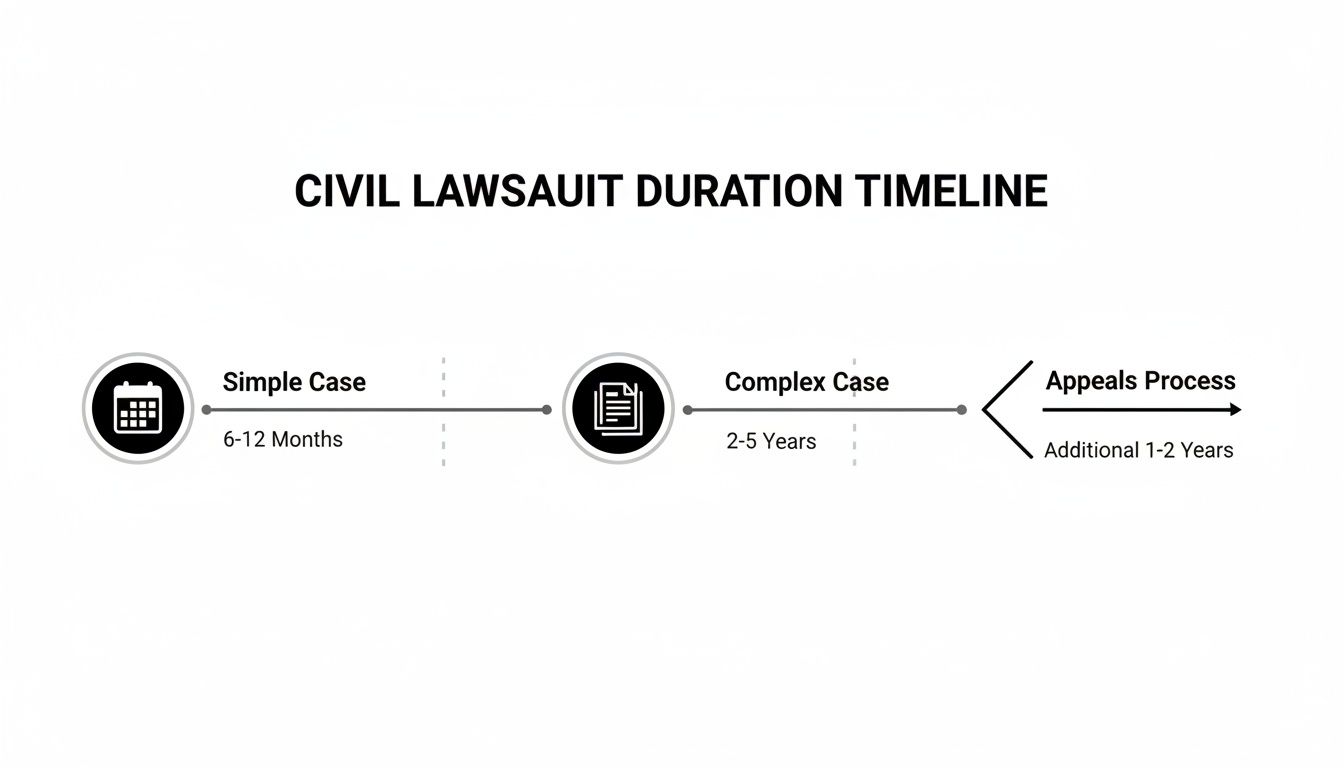
As you can see, a straightforward case might wrap up in under a year. But a complex one involving serious injuries can easily stretch on for several years before it’s resolved.
Stage 3: The Discovery Process (6 to 18+ Months)
Welcome to the heart of the lawsuit. The discovery phase is where both sides are required to exchange all relevant information and evidence. It is, by far, the most time-consuming part of the whole ordeal, and for good reason: it’s designed to make sure there are no surprises if the case goes to trial.
Discovery relies on a few key tools:
- Interrogatories: These are written questions sent to the other side, which they must answer under oath.
- Requests for Production: This is a formal request for documents like internal company reports, emails, or photographs.
- Depositions: These are out-of-court Q&A sessions where lawyers question witnesses and the parties involved under oath. A court reporter transcribes every word.
This stage is absolutely crucial for building your case and getting a clear-eyed view of the other side’s arguments. How long it takes depends entirely on the case's complexity. A simple car wreck might only need a short discovery period, but a medical malpractice case could involve dozens of depositions and expert reports, taking well over a year to complete. If you're curious about the nuts and bolts, learning how to do a Texas court records search for free can give you a window into the kinds of documents and timelines involved in real cases.
Stage 4: Motions and Negotiations (2 to 6 Months)
As discovery starts to wrap up, the focus shifts toward trying to resolve the case. Attorneys on both sides might file pre-trial motions, asking the judge to make a ruling on specific legal issues—for example, a motion to block certain evidence from being used at trial.
This is also when settlement talks get serious. With all the evidence finally on the table, both sides have a much better idea of what the case is truly worth. Many cases are steered into mediation at this point.
A mediator is a neutral third party trained to help both sides find common ground and reach a settlement. In Texas, many judges actually require parties to try mediation before they'll even consider setting a trial date, simply because it’s so effective at resolving disputes.
The overwhelming majority of lawsuits end right here. A successful negotiation avoids the time, expense, and uncertainty of a trial.
Stage 5: Trial and Appeals (1 Week to 2+ Years)
If a settlement just isn't in the cards, the case will head to trial. It’s important to remember how rare this is—fewer than 5% of personal injury cases ever make it to a courtroom. A trial itself can be over in a few days for a simple case or last several weeks for a more complex one.
And even after a verdict is read, the journey might not be over. The losing party has the right to appeal the decision to a higher court. The appeals process is notoriously slow and can easily add another one to two years (or more) before the case is truly, finally over.
What Speeds Up or Stalls Your Lawsuit
Ever wonder why one personal injury case seems to wrap up in six months, while a nearly identical one gets stuck in legal limbo for years? It’s not random. A handful of critical factors can either put your lawsuit on the fast track or bring it to a screeching halt.
Getting a handle on these dynamics is the key to setting realistic expectations for how long your civil lawsuit will actually take.
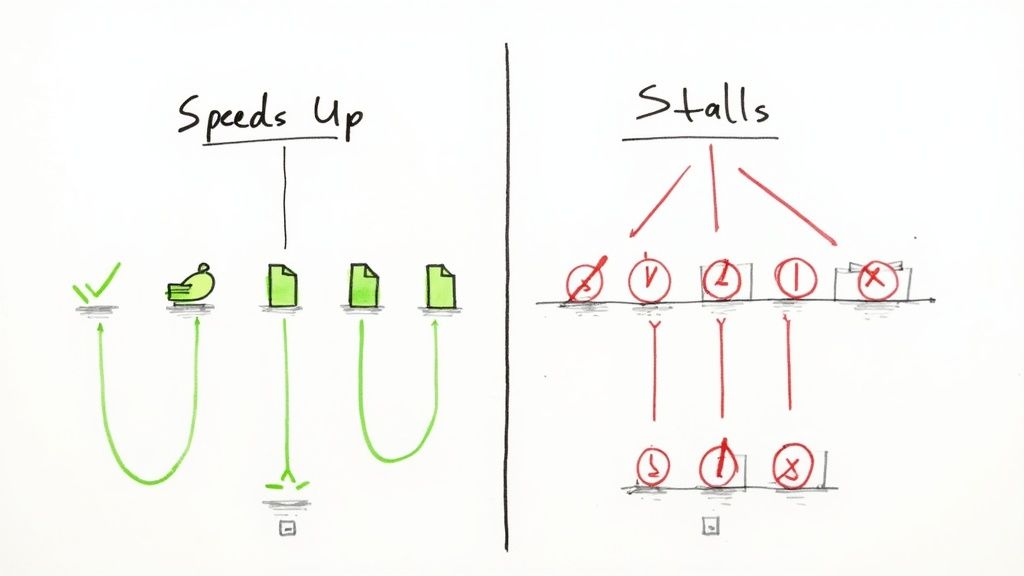
Accelerators: What Puts Your Case in the Fast Lane
Some elements can drastically shorten the timeline from the day of your injury to the day you get a resolution. When the stars align, a case can move forward with surprising speed, often paving the way for a quicker, more favorable settlement.
Here’s what helps move things along:
- Undisputed Liability: This is the single biggest accelerator. If there's clear, undeniable evidence of who was at fault—think a driver running a red light on camera—there’s very little for their insurance company to argue about. These cases often skip straight to negotiating the damages.
- Clear, Well-Documented Injuries: When your medical records create a direct, unambiguous line from the accident to your injuries, it simplifies everything. If you've also finished your treatment, the defense has far less room to argue that your injuries were pre-existing or not as bad as you claim.
- A Cooperative Opponent: It’s a game-changer when the defendant or their insurance adjuster is willing to negotiate in good faith. When their goal is to resolve the claim efficiently instead of dragging it out, you can cut months off the process.
- Realistic Expectations: A plaintiff who, with their attorney's guidance, understands the reasonable value of their case is far more likely to recognize and accept a fair settlement offer. Holding out for an unrealistic number can force a case toward a trial that nobody really wants.
Roadblocks: What Brings Your Lawsuit to a Grinding Halt
On the flip side, there are common roadblocks that can easily add months, or even years, to your case. These issues inject complexity and conflict into the process, making a swift resolution much harder to achieve.
The complexity of the evidence is often the primary source of delay. A case that relies on the testimony of multiple medical experts to establish long-term damages will inherently take longer than a case with straightforward medical bills.
Be prepared for a longer fight if your case involves any of these factors:
- Disputed Liability: If the other side denies they were at fault or, worse, claims you were partially to blame, things get complicated fast. This kicks off a lengthy discovery process to prove who was negligent, which is a major time sink.
- Multiple Defendants: Lawsuits with several at-fault parties are notoriously slow. Think of a multi-car pile-up or a commercial truck accident. Each defendant has their own legal team, and they often spend a significant amount of time just pointing fingers at each other, which stalls any progress for you.
- Aggressive Legal Tactics: Unfortunately, delay can be a deliberate strategy. Some defense lawyers and insurance companies will file endless motions, drag their feet on producing documents, or schedule depositions months out—all in an effort to wear you down and get you to accept a lowball settlement.
- An Overloaded Court System: Sometimes, the delay has nothing to do with your case at all. A backed-up court docket can mean waiting months just for a judge to hear a simple motion, let alone get an actual trial date. It’s a frustrating reality that’s completely out of your (and your attorney's) control.
A Look at Lawsuit Timelines Across the US
To get a real sense of how long a civil lawsuit might take, we have to move past stories and look at the actual data. While it's true that every case has its own unique twists and turns, national statistics show clear patterns that can help set realistic expectations.
The numbers don't lie: where you file your lawsuit can make a massive difference in how long it takes to resolve. This isn't just about legal strategy; it's a practical reality driven by court backlogs and local efficiency. The same exact case could wrap up relatively quickly in one district but drag on for years in another.
The National Average: A Deceptive Number
At first glance, the data from the U.S. federal court system seems pretty reasonable. The average time to resolve a civil case from filing to finish is just 344 days—less than a year. But that number is incredibly misleading. It’s a giant melting pot of data, lumping together cases dismissed in a few weeks with epic legal battles that stretch on for a decade or more.
This average also hides huge geographic differences. Some federal court circuits are known for moving cases along swiftly. For instance, the Eleventh Circuit (which covers Alabama, Florida, and Georgia) is the fastest, resolving cases in an average of only 290 days.
On the other end of the spectrum, some districts are notoriously slow. A case filed in the Southern District of West Virginia, for example, takes an average of 1,153 days to resolve. That’s more than three years. This stark contrast drives home a critical point: the courthouse location is a major factor in your lawsuit’s timeline.
How Case Type Influences Duration
Beyond where you file, what your case is about plays an even bigger role. Let's be clear: not all civil lawsuits are built the same. A straightforward contract dispute is a world away from a complex product liability claim that involves mountains of technical documents and a dozen expert witnesses.
This table gives a clearer picture, showing how different types of civil cases in the federal system have vastly different timelines.
Average Time to Resolution by U.S. Federal Case Type
| Case Type | Average Duration (in Days) |
|---|---|
| Contract Disputes | 310 |
| Personal Injury (Motor Vehicle) | 365 |
| Product Liability | 580 |
| Civil Rights | 620 |
| Antitrust | 1,020 |
As you can see, the complexity and nature of a case have a direct impact on how long it takes to get through the system. A car accident case, while serious, is generally less complicated than an antitrust lawsuit involving massive corporations.
Let's break down why that is:
- Contract Disputes: These cases often hinge on written documents and can sometimes be decided by a judge on motions before a trial is ever needed.
- Personal Injury (Motor Vehicle): Simpler car wreck cases can settle quickly. But when injuries are severe or it's unclear who's at fault, the timeline stretches. You can learn more about this in our detailed guide on how long personal injury settlements take.
- Product Liability: These are some of the most complex and time-consuming cases. They demand extensive expert analysis and a deep dive into company records, pushing the timeline out for years.
- Civil Rights Claims: These cases frequently involve thorny legal questions and determined opposition from government entities, leading to longer-than-average timelines.
The main takeaway here is simple: the more complex the facts, the more evidence there is to collect and analyze. This directly extends the discovery phase, which is almost always the longest part of any lawsuit.
The Crucial Role of How a Case Ends
Finally, the single biggest factor determining a lawsuit's length is how it's resolved. The vast majority of civil cases—well over 90%—never actually go to trial. They end in other ways that are almost always faster and cheaper.
Think of it like three potential exit ramps on a highway:
- Dismissal: A judge throws the case out early for legal reasons. This is the fastest possible outcome.
- Settlement: Both sides reach an agreement they can live with, usually during discovery or mediation. This is how most cases end, and it's far quicker than waiting for a trial.
- Trial Verdict: A tiny fraction of cases make it all the way to a jury or judge for a final decision. This is by far the longest, most expensive, and most stressful path.
Cases that go to trial are the ones that create those eye-popping, multi-year timelines. The prep work, the trial itself, and the possibility of appeals can add years to the process. This is precisely why good attorneys focus on building a rock-solid case during discovery—it creates the leverage needed to negotiate a fair settlement long before a trial is even on the horizon.
A Global Perspective: How U.S. Lawsuit Timelines Stack Up
If you're feeling like your lawsuit is dragging on, you're not alone. This isn't just an American phenomenon; lengthy civil court battles are a challenge worldwide. Putting the U.S. system in a global context helps us see the bigger picture and understand how different legal traditions try to balance justice with efficiency.
Looking across the Atlantic gives us a good benchmark. The European Court of Human Rights, for example, generally views a two-year span for each level of court proceedings as a "reasonable" amount of time for a standard civil case. Anything longer than that tends to attract scrutiny, which puts a bit of pressure on member countries to keep things moving.
Models of Efficiency Around the World
Some legal systems are famous for their speed. Germany often gets pointed to as a model of efficiency, with a structure designed to push cases toward a resolution much faster than many other countries. It's not unusual for a straightforward civil case there to wrap up in about six months, thanks to judges who take an active role in managing the case from the start.
But no matter where you are, one thing is universally true: going to trial is the biggest time sink. That's why the goal in almost any modern legal system is to settle the dispute long before it gets to that point.
The global legal community is increasingly leaning on alternative dispute resolution, especially international arbitration. Why? Because it’s a faster route to a final decision. The data is clear: arbitration consistently beats traditional court litigation on speed.
Arbitration vs. Litigation: A Tale of Two Timelines
For anyone tangled in a cross-border dispute, the decision between going to court and arbitrating often boils down to one thing: time. The difference is stark.
While lawsuit timelines vary everywhere, U.S. cases that go the distance take a while. The median time to get to a trial is roughly 22 months, and more complex federal cases can easily stretch to 36 months or more.
International arbitration, on the other hand, moves at a much quicker pace.
- The average international arbitration case is over in just 15 months.
- Compare that to traditional litigation, where getting a final judgment can take nearly 28 months.
You can dive deeper into the numbers with this detailed analysis on the median length of legal disputes.
This global tour reinforces a crucial lesson for anyone in a lawsuit: the entire system is built to push you toward a settlement. U.S. timelines might feel long, but they reflect a worldwide reality where avoiding a full-blown trial is the best way to get a timely and cost-effective outcome. Whether you're in Texas or Germany, the same basic forces of negotiation, evidence, and case complexity will always shape the journey.
How You Can Help Move Your Case Forward
While a lot of what determines how long a civil lawsuit takes is out of your hands, you’re far from a powerless spectator. As the plaintiff, your actions—and sometimes your inaction—can have a real impact on your case’s momentum. Think of yourself as a crucial member of the legal team; being a proactive and organized client is one of the best ways to prevent unnecessary hold-ups.
Your relationship with your attorney is a partnership. They handle the complex legal maneuvering, but you provide the raw materials: the facts, the documents, and the personal story. When you can supply that information quickly and clearly, you help keep the whole machine running smoothly. It’s often the small delays in communication that snowball, leading to missed deadlines and a stalled case.
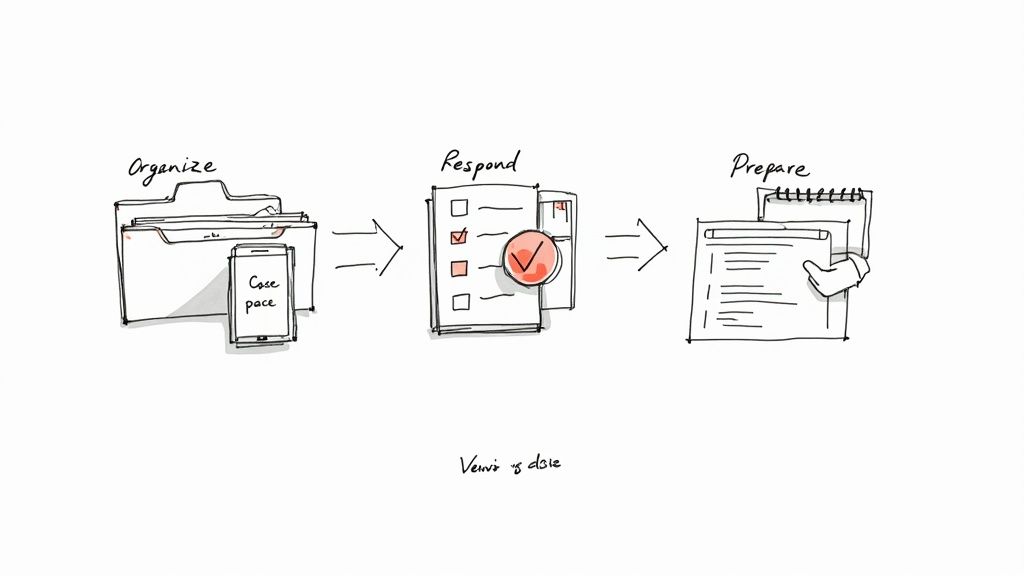
Be Your Own Best Advocate
So, what does it mean to be a good partner to your legal team? It really comes down to a few practical habits. Taking ownership of your part in the process helps you avoid becoming the source of the very delays you’re trying to prevent.
- Organize Your Documents: Get a folder or a box and keep everything related to your case in one place. We’re talking medical bills, police reports, photos of the accident scene, emails—everything. When your lawyer can get their hands on organized documents, it saves them a ton of time (and saves you money).
- Respond Promptly: When your lawyer’s office calls or emails asking for information or a signature, treat it with urgency. A quick turnaround on your end lets them hit court deadlines and keep the pressure on the other side.
- Be Thorough and Honest: This one is huge. Never hide information from your attorney, even if you’re worried it might hurt your case. They need the full story, warts and all, to build the strongest strategy and prepare for whatever the defense might throw at them.
A lawsuit is a marathon, not a sprint. The emotional toll can be draining. Preparing yourself mentally for a long haul is just as critical as getting your paperwork in order. If you go in with realistic expectations, you'll be more resilient through the inevitable ups and downs.
Understand Your Role in Key Stages
Your input becomes absolutely critical at certain points in the timeline. For instance, in the early pre-litigation stage, your detailed account of the incident and how it has affected your life is the foundation for the initial demand letter. To see just how important this document is, you can learn more about what goes into an effective settlement demand letter in our guide.
Later on, during the discovery phase, you'll have to answer written questions (called interrogatories) and almost certainly sit for a deposition. Your preparation, honesty, and clarity here can make or break your credibility. By being an engaged, responsive client, you give your attorney the tools they need to push your case forward, turning potential roadblocks into simple steps toward a resolution.
Your Top Questions About Lawsuit Timelines, Answered
When you're facing a lawsuit, the biggest question is often the simplest: "How long is this going to take?" The unknown can be the most stressful part of the entire process. Let's tackle some of the most common questions people have about the timeline of a civil case.
Getting straight answers to these questions will help set realistic expectations and clear up some of the myths you might have heard.
Can My Lawyer Give Me an Exact Date for When My Case Will Be Over?
The short answer is no, and you should be very cautious of any attorney who tells you otherwise. A good lawyer can give you an educated guess based on their experience with similar cases, but they simply can’t predict the future.
So many things can pop up and change the schedule. Courts get backlogged, the other side might intentionally drag their feet, or new evidence could surface that changes everything.
A trustworthy lawyer will be upfront about these variables from day one. Their job is to give you a realistic range and keep you in the loop as things progress, not to make promises they can't keep.
Does Filing a Lawsuit Mean I'm Definitely Going to Court?
Not at all. In fact, it's highly unlikely your case will ever end up in a trial. The reality is that well over 90% of civil cases are settled out of court long before a judge or jury ever gets involved.
Filing the lawsuit is a formal step that gets the legal process started. More often than not, it’s the move that finally gets the other side to take your claim seriously and start negotiating in good faith. Think of it as a strategic play that shows you mean business, which, ironically, makes a settlement more likely.
Will My Case Go Faster If I Just Accept the First Settlement Offer?
Sure, taking the first offer would get things over with quickly, but it would almost certainly be a massive financial mistake. That first offer from an insurance company is almost always a lowball amount. They're testing you to see if you're desperate enough to take a quick, cheap payout.
Jumping on that initial offer means leaving a significant amount of money on the table—money you’re owed for your injuries and losses. Building a strong case and negotiating a fair settlement takes time and patience. When it comes to personal injury claims, a fast resolution is rarely the best resolution.
Navigating the complexities of a motor vehicle accident claim requires data, not just guesswork. Verdictly provides access to real Texas verdicts and settlements, empowering you to understand what similar cases are worth. See how our AI-powered legal data platform can inform your strategy and support fairer negotiations.
Related Posts

A Guide to Medical Records Reviews in Personal Injury Claims
Learn how medical records reviews can strengthen your Texas injury claim. This guide explains the process, key findings, and how to build a stronger case.

Why Insurance Companies Deny Claims: why insurance companies deny claims
Learn why insurance companies deny claims and how to overcome common denials with proven appeals and tips to maximize your compensation.

How Much Can I Get From a Car Accident Settlement?
Wondering how much can I get from a car accident? This guide breaks down settlement factors, damages, and claim values to help you estimate your compensation.