
10 Types of Damages in Personal Injury Cases in Texas (2025)
Discover the 10 key types of damages in personal injury cases. Learn how economic and non-economic damages are calculated in Texas with real examples.
When a car accident leaves you injured and facing a mountain of bills, the legal system offers a path to financial recovery through what are known as "damages." These damages are the monetary compensation awarded to an injured party for the losses they've suffered due to someone else's negligence. But what exactly does that cover? The answer is more complex than many realize, extending far beyond the initial hospital bills. Understanding the specific types of damages in personal injury cases is the first, most critical step in evaluating the true value of your claim and ensuring you receive a fair settlement.
This guide is designed to demystify the process for injured Texans. We will break down the ten primary categories of damages you can pursue, from concrete, easily calculated costs to the more abstract, yet equally valid, impacts on your quality of life. For each type, you'll find a clear definition, practical examples from motor vehicle accident scenarios, and crucial Texas-specific rules that could affect your recovery.
More importantly, this article provides a data-driven perspective. Using real-world settlement and verdict data, we will explore how these damages are valued and calculated, giving you a realistic framework for your own case. By understanding these building blocks, you can better advocate for your needs, engage in more effective negotiations, and confidently navigate the path toward the compensation you rightfully deserve.
1. Medical Expenses (Special Damages)
Medical expenses are one of the most fundamental types of damages in personal injury cases. They fall under the category of "special damages" or "economic damages" because they represent specific, calculable financial losses directly caused by the injury. This compensation covers the full spectrum of healthcare costs incurred, from the initial emergency response to long-term rehabilitative care.
The goal is to reimburse the plaintiff for every dollar spent on treatment. This includes both past expenses already paid or billed and future medical costs that are reasonably certain to be necessary. Because these damages are tied to documented bills and professional medical opinions, they form the concrete foundation of most personal injury claims.
How Medical Expenses Are Calculated
Calculating medical damages involves a meticulous process of gathering and totaling all related invoices and projecting future needs. This includes:
- Emergency Services: Ambulance rides, emergency room treatment, and initial hospital stabilization.
- Hospitalization & Surgery: Costs for hospital stays, surgical procedures, anesthesiologist fees, and facility charges.
- Ongoing Treatment: Follow-up appointments with specialists, physical and occupational therapy, and chiropractic care.
- Medication & Devices: Prescription drug costs, crutches, wheelchairs, and other necessary medical equipment.
For severe injuries requiring lifelong care, attorneys often hire a life care planner. This medical expert creates a detailed, evidence-based report outlining all anticipated future medical needs and their associated costs, providing a solid basis for demanding future damages.
Practical Tips for Plaintiffs
To ensure you recover the full value of your medical expenses, documentation is critical.
- Keep a Detailed File: Maintain a folder with every bill, receipt, invoice, and explanation of benefits (EOB) from your insurers.
- Track Everything: Document all prescriptions, over-the-counter medications, and mileage to and from medical appointments. These small costs add up.
- Follow Doctor's Orders: Adhering to your prescribed treatment plan is crucial for both your recovery and for demonstrating the necessity of the care to the insurance company or jury.
2. Lost Wages and Loss of Earning Capacity (Special Damages)
After an accident, the inability to work is another significant financial blow, making lost income a critical component of types of damages in personal injury cases. This compensation, like medical expenses, falls under "special damages" because it covers quantifiable economic losses. It addresses both the immediate income lost during the recovery period and the long-term reduction in a person's ability to earn a living due to permanent injuries.
The goal is to restore the financial stability that was disrupted by the injury. This includes past wages you would have earned had you not been injured, as well as the future income you will be unable to earn. These damages acknowledge that an injury's impact extends beyond medical bills, directly affecting a plaintiff's livelihood and financial security.
How Lost Wages and Earning Capacity Are Calculated
Calculating this damage category involves both concrete documentation and expert projection.
- Lost Wages (Past): This is the more straightforward calculation, involving proof of income you missed from the date of the injury until you could return to work. This includes salary, hourly pay, bonuses, commissions, and missed overtime opportunities.
- Loss of Earning Capacity (Future): This is more complex and applies when an injury permanently affects your ability to perform your job or any job. For instance, a construction worker who suffers a severe back injury in a single-car accident may never be able to return to manual labor. This calculation projects your lost potential earnings over the remainder of your expected work life.
To substantiate a claim for diminished future earning capacity, attorneys often work with vocational rehabilitation experts and economists. These professionals analyze the plaintiff's skills, education, work history, and the physical limitations imposed by the injury to project the long-term financial impact.
Practical Tips for Plaintiffs
To build a strong claim for lost income, meticulous documentation is essential.
- Gather Financial Records: Collect pay stubs, W-2s, and at least 3-5 years of tax returns to establish a clear earnings history.
- Obtain Employer Verification: Ask your employer for a letter that confirms your job title, pay rate, and the specific dates you were unable to work due to your injury.
- Document Your Work History: Keep records of your career path, including promotions, raises, and positive performance reviews to demonstrate your earning trajectory.
3. Pain and Suffering (General Damages)
Pain and suffering is one of the most significant yet subjective types of damages in personal injury cases. This compensation falls under the category of "general damages" or "non-economic damages" because it addresses intangible losses that do not have a precise dollar value. It is meant to compensate victims for the physical discomfort and emotional distress they endure as a direct result of their injuries.
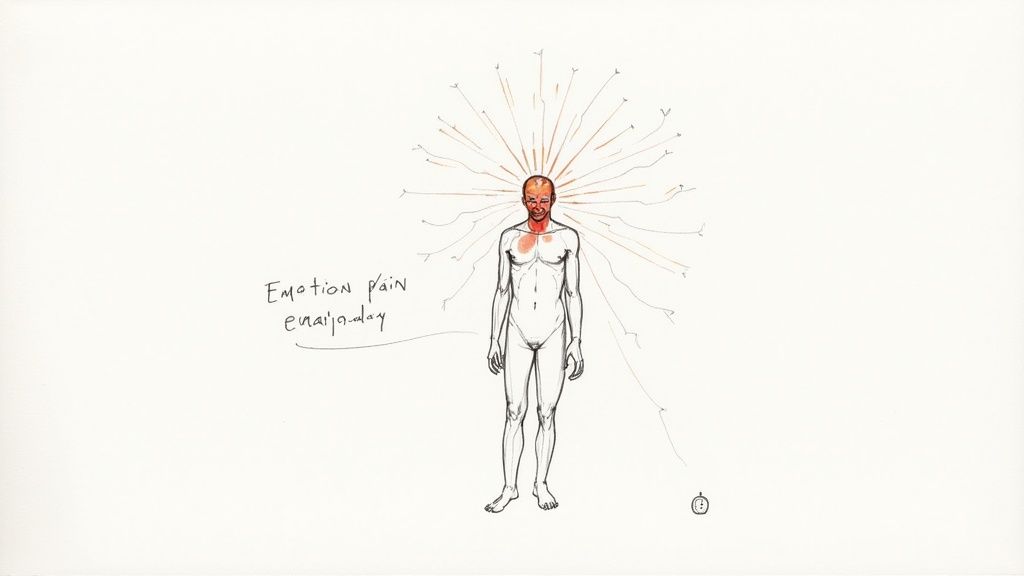
The goal of this award is to acknowledge the human cost of an accident, including physical pain, emotional anguish, anxiety, depression, and the overall loss of enjoyment of life. Because these damages are not tied to specific invoices, their valuation is complex and often becomes a central point of negotiation in a car accident settlement. Juries and adjusters must assess the severity and duration of the victim's suffering to assign a monetary value.
How Pain and Suffering Is Calculated
Calculating pain and suffering damages is not based on a strict formula but rather a qualitative assessment of the injury's impact. Attorneys and insurance companies often use methods like:
- The Multiplier Method: Totaling the plaintiff's economic damages (like medical bills and lost wages) and multiplying that amount by a number, typically between 1.5 and 5, depending on the severity of the injury.
- The Per Diem Method: Assigning a daily rate for the victim's pain and suffering and multiplying it by the number of days they are expected to experience that suffering.
- Case Precedent: Analyzing verdicts and settlements from similar cases (like the data found on Verdictly) to establish a reasonable range.
For example, a burn victim with chronic pain and disfiguring scars might receive a higher multiplier than someone with a whiplash injury that resolves in a few months.
Practical Tips for Plaintiffs
To substantiate your claim for pain and suffering, you must provide compelling evidence of your experience.
- Keep a Pain Journal: Document your daily pain levels, emotional state, and specific activities you can no longer do or that cause you difficulty.
- Get Expert Testimony: A doctor can testify about the painful nature of your injuries, while a psychologist can explain the emotional trauma, such as PTSD or anxiety.
- Gather Visual Evidence: Use photographs and videos to show the progression of your injuries and the ways your life has been limited since the accident.
- Have Friends and Family Testify: Statements from those close to you can provide powerful, third-party accounts of how the injury has negatively impacted your life.
4. Emotional Distress and Mental Anguish (General Damages)
Emotional distress and mental anguish are significant types of damages in personal injury cases that address the psychological impact of an accident. As "general damages," they are non-economic, meaning they compensate for subjective, non-monetary losses like fear, anxiety, depression, and post-traumatic stress disorder (PTSD). This compensation acknowledges that the harm from an injury often extends far beyond physical pain.
Unlike a medical bill, mental suffering has no fixed price tag. The goal is to provide a monetary value for the victim's psychological trauma and diminished quality of life. Because these damages are intangible, proving their existence and severity often requires compelling testimony from the victim, their loved ones, and mental health professionals.
How Emotional Distress Is Calculated
Calculating a value for mental anguish is subjective and often linked to the severity of the physical injuries and the impact on the plaintiff's daily life. Juries and insurance adjusters consider several factors:
- Severity and Duration: The intensity of the emotional suffering and how long it is expected to last.
- Impact on Daily Life: How the trauma affects the victim's ability to work, sleep, maintain relationships, or enjoy hobbies.
- Underlying Physical Injury: Courts often require a related physical injury to award mental anguish damages, although there are exceptions.
- Expert Testimony: A psychiatrist or psychologist can provide a professional diagnosis (e.g., PTSD, Major Depressive Disorder) and explain the long-term prognosis, giving the claim strong credibility.
For example, a jury might award a car accident survivor $200,000 for PTSD requiring years of therapy, or a sexual assault victim $150,000 for severe anxiety and depression that prevents them from returning to work.
Practical Tips for Plaintiffs
To build a strong claim for emotional distress, you must provide clear and convincing evidence of your suffering.
- Seek Mental Health Treatment: Immediately consult a therapist, psychologist, or psychiatrist. This creates a medical record of your condition.
- Keep a Journal: Document your feelings, anxiety attacks, nightmares, and how the trauma affects your daily routine. This personal record can be powerful evidence.
- Follow Treatment Plans: Consistently attend therapy sessions and take all prescribed psychiatric medications. This demonstrates the seriousness of your condition.
- Obtain an Expert Opinion: Your attorney will likely hire a mental health expert to evaluate you and provide testimony linking your psychological condition directly to the accident.
5. Permanent Disability and Disfigurement (General Damages)
Permanent disability and disfigurement represent one of the most serious types of damages in personal injury cases. This compensation falls under "general damages" because it addresses non-economic losses that profoundly alter a victim's life and appearance. It covers permanent physical changes, such as scarring or amputation, and the loss of bodily functions that affect daily activities, self-esteem, and social interactions.
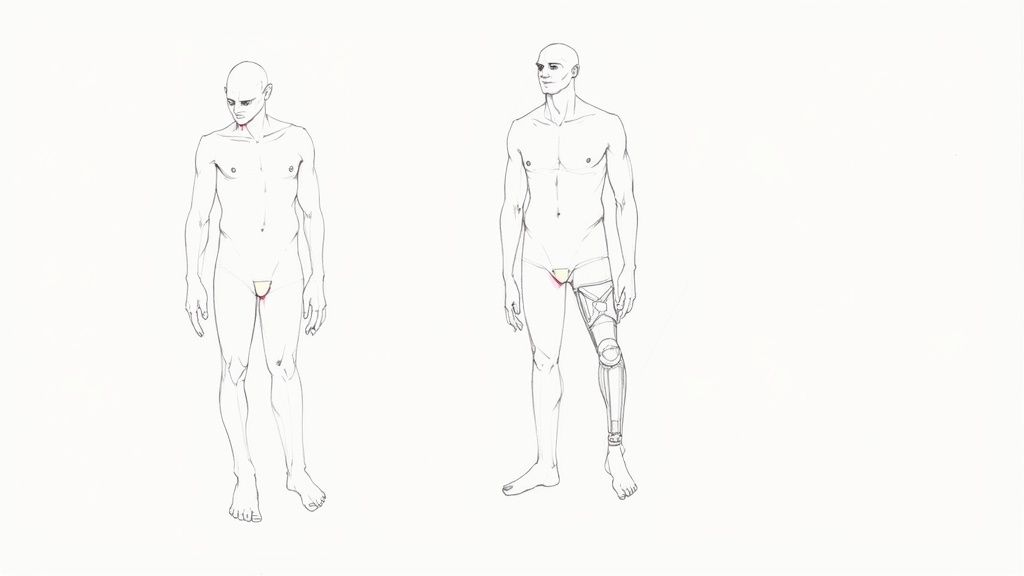
The goal is to compensate for the lifelong physical and emotional challenges resulting from these permanent changes. Unlike a broken bone that heals, disfigurement and disability create a new, often difficult, reality for the victim. Juries consider the nature of the disfigurement, its location (e.g., facial scarring is often valued higher), the plaintiff's age, and the overall impact on their quality of life when determining an award.
How These Damages Are Calculated
Quantifying a permanent loss is subjective and relies heavily on demonstrating the full scope of its impact to a jury or claims adjuster. Key factors include:
- Severity and Visibility: A severe burn on the face will typically result in a higher award than minor scarring on a less visible part of the body.
- Loss of Function: Compensation for an amputated limb includes not just the physical disfigurement but also the permanent loss of function and independence.
- Psychological Harm: The emotional distress, social anxiety, and depression resulting from a disfiguring injury are central to the valuation.
- Cost of Remediation: Estimates for future cosmetic surgeries or prosthetic devices help anchor the value of the claim.
For injuries of this magnitude, understanding previous outcomes is crucial. You can learn more about how Texas courts handle claims involving catastrophic injuries to see how these factors play out in real cases.
Practical Tips for Plaintiffs
Thorough documentation is essential to conveying the true impact of a permanent injury.
- Document Visually: Obtain professional photographs of the disfigurement soon after the injury and throughout the healing process to show its permanence.
- Show the Contrast: Gather "before" and "after" photos to create a powerful comparison that illustrates the extent of the change.
- Keep a Journal: Document your emotional journey, detailing feelings of embarrassment, anxiety, or depression related to your appearance or disability.
- Consult Experts: Obtain consultations and cost estimates from plastic surgeons for future reconstructive procedures, even if you don't plan to undergo them.
6. Loss of Consortium (Derivative Damages)
Loss of consortium is a unique and deeply personal type of damages in personal injury cases. It falls under the category of "derivative damages" because the claim is derived from the primary injury suffered by a spouse or family member. This compensation is awarded not to the injured person, but to their loved ones for the loss of the intangible benefits of that relationship.
The purpose of this claim is to recognize that a catastrophic injury impacts the entire family unit. It compensates for the loss of companionship, affection, emotional support, sexual intimacy, and the shared services of a household partner. Because these damages address the human, relational cost of an injury, they are considered non-economic and are often challenging to quantify.
How Loss of Consortium is Calculated
Calculating loss of consortium is subjective and relies on demonstrating the profound changes in the relationship before and after the accident. There are no bills or invoices; instead, the valuation depends on evidence showing the quality of the relationship, including:
- Loss of Companionship: The inability to share activities, hobbies, and day-to-day life as they did before the injury.
- Loss of Marital Relations: The negative impact on physical intimacy and affection within a marriage.
- Loss of Household Services: The value of chores, home maintenance, and childcare the injured person can no longer provide.
- Loss of Emotional Support: The loss of guidance, comfort, and emotional connection that was central to the relationship.
In Texas, this claim is typically limited to a spouse or, in a wrongful death case, to parents and children. For example, a jury might award a wife $150,000 after her husband's severe injury prevents them from maintaining their marital relationship and sharing household duties.
Practical Tips for Plaintiffs
To successfully pursue a loss of consortium claim, you must provide compelling evidence of the relationship's decline.
- Document Relationship Changes: Keep a journal detailing how the injury has affected your daily interactions, emotional connection, and shared responsibilities.
- Utilize Testimony: The testimony of the non-injured spouse is the most powerful evidence. Friends, family, or a marriage counselor can also testify about the negative changes they have observed.
- Gather "Before" Evidence: Collect photos, videos, and witness accounts that establish the strong, loving, and supportive nature of your relationship prior to the accident. This creates a clear contrast for the jury.
7. Punitive Damages (Exemplary Damages)
Unlike other types of damages in personal injury cases that compensate the victim, punitive damages serve a different purpose: to punish the defendant. Also known as "exemplary damages," they are awarded in cases where the defendant's conduct was particularly egregious, malicious, fraudulent, or grossly negligent. This compensation goes beyond making the plaintiff whole and aims to deter the wrongdoer and others from engaging in similar harmful behavior in the future.
Punitive damages are not awarded in every case. They are reserved for situations where the defendant's actions show a conscious disregard for the rights and safety of others. Because their goal is punishment and deterrence, they are often awarded in cases involving corporate misconduct, such as a manufacturer knowingly selling a defective product, or severe individual recklessness, like a drunk driver causing a catastrophic accident.
How Punitive Damages Are Calculated
There is no fixed formula for calculating punitive damages. A jury considers several factors to determine an appropriate amount, including:
- The Reprehensibility of the Conduct: How malicious, fraudulent, or reckless was the defendant's behavior?
- The Defendant's Financial Status: The award must be significant enough to punish the defendant. A multi-billion-dollar corporation would require a larger award than a private individual.
- The Harm Caused: The severity of the plaintiff's injuries and the amount of compensatory damages awarded.
- Ratio to Compensatory Damages: Courts often look at the ratio between punitive and compensatory damages to ensure it is not excessive.
In Texas, there are statutory caps on punitive damages. Generally, they are limited to the greater of (a) two times the amount of economic damages plus an amount equal to non-economic damages (up to $750,000), or (b) $200,000.
Practical Tips for Plaintiffs
Securing punitive damages requires proving a higher standard of fault, often "gross negligence" or "malice."
- Document Defendant's Knowledge: Gather any evidence showing the defendant knew about the risk but ignored it, such as internal emails or reports.
- Investigate Patterns of Behavior: Show that the defendant's harmful conduct was not an isolated incident but part of a repeated pattern.
- Highlight Egregious Actions: Focus on facts that demonstrate a conscious indifference to safety, like a drunk driver with multiple prior DWIs or a company that deliberately hid safety test results.
8. Rehabilitation and Future Care Costs (Special Damages)
For catastrophic injuries with long-term consequences, rehabilitation and future care costs are among the most critical types of damages in personal injury cases. These are a forward-looking form of special (economic) damages, designed to provide financial security for a lifetime of necessary medical treatment, assistance, and home modifications. This compensation covers everything from ongoing physical therapy to in-home nursing care.
The objective is to ensure the plaintiff has the resources to manage their condition and maintain the highest possible quality of life. Unlike past medical bills, these damages are based on expert projections of what will be reasonably required for the remainder of the victim's life. These costs often form the largest component of a severe injury claim, such as those involving spinal cord or traumatic brain injuries.
How Rehabilitation and Future Care Costs Are Calculated
Calculating these damages is a complex process that relies heavily on expert testimony. Attorneys work with medical and financial professionals to create a comprehensive life care plan.
- Life Care Planning: A certified life care planner, often a nurse or rehabilitation specialist, will conduct a thorough assessment of the plaintiff's medical needs. They project the costs of future surgeries, therapies, medications, and medical equipment over the plaintiff's expected lifespan.
- Home and Vehicle Modifications: This includes costs for wheelchair ramps, accessible bathrooms, specialized vehicles, and other modifications needed to accommodate a permanent disability.
- Assistive and Therapeutic Care: Projections cover ongoing needs like physical therapy, occupational therapy, psychological counseling, and potentially round-the-clock nursing or attendant care.
- Economic Projections: An economist then takes the life care plan and calculates the total present-day value, accounting for medical inflation and investment potential.
Practical Tips for Plaintiffs
Securing fair compensation for future care requires meticulous planning and expert support from the very beginning.
- Hire a Life Care Planner Early: Engaging a certified life care planner early in your case provides a credible, detailed foundation for your future damages claim.
- Document Everything: Keep a journal detailing daily challenges and the assistance you require. This personal record helps illustrate the real-world impact of your injuries.
- Get Specific Local Costs: Ensure your experts research the actual costs of services, equipment, and care in your specific geographic area, as prices can vary significantly.
9. Property Damage and Replacement Costs (Special Damages)
Property damage is a common and tangible component of the types of damages in personal injury cases, especially those arising from motor vehicle accidents. This compensation falls under "special damages" because it covers the specific, measurable costs of repairing or replacing personal property destroyed or damaged in the incident. It ensures the victim is made financially whole for these direct material losses.
The primary goal is to restore the plaintiff to the financial position they were in before the incident by covering the cost of their damaged property. This typically includes the plaintiff's vehicle but can also extend to any personal belongings that were inside it, such as laptops, cell phones, or specialized equipment. The valuation is based on fair market value or the actual cost of repair or replacement.
How Property Damage Is Calculated
Calculating property damage involves assessing the extent of the harm and determining the cost to rectify it. The value is usually the lesser of the cost to repair the item or its actual cash value (ACV) at the time of the loss.
- Vehicle Damage: The most common element, calculated through professional repair estimates. If the repair cost exceeds the vehicle's market value, it may be declared a "total loss," with compensation based on its pre-accident ACV.
- Personal Belongings: Includes items like electronics, clothing, or cargo damaged in the accident. Value is determined by receipts or market value for comparable used items.
- Loss of Use: Compensation for the cost of a rental car or alternative transportation while the primary vehicle is being repaired or replaced.
- Diminished Value: In Texas, you can also claim the loss in resale value your vehicle suffers even after being fully repaired.
For example, a jury might award $25,000 for vehicle repairs, $1,500 for a damaged laptop that was inside, and $800 for a rental car used during the repair period.
Practical Tips for Plaintiffs
To maximize your recovery for property damage, meticulous documentation is key.
- Get Professional Estimates: Obtain at least two detailed repair estimates from reputable body shops to establish the cost of repairs.
- Document Everything: Photograph the damage to your vehicle and any personal items before any repairs are made.
- Keep All Receipts: Save receipts for rental cars, personal property replacement, and any towing or storage fees.
- Consider Salvage Value: If your vehicle is a total loss, understand that the insurance company will deduct the vehicle's salvage value if you decide to keep it.
10. Loss of Enjoyment of Life (General Damages)
Loss of enjoyment of life, often called "quality of life damages," is one of the most significant non-economic types of damages in personal injury cases. It falls under the "general damages" category, compensating a victim for the inability to participate in and derive pleasure from the activities that once brought them joy. This goes beyond physical pain, addressing the profound loss experienced when an injury permanently strips away hobbies, recreational pursuits, and social engagements.
The goal is to provide monetary compensation for the diminished quality of a person's life. A severe injury can prevent a musician from playing an instrument, an athlete from competing, or an outdoor enthusiast from hiking. These damages acknowledge that a life's value is measured by more than just the ability to work; it is also measured by the joy and fulfillment derived from personal passions.
How Loss of Enjoyment of Life is Calculated
Unlike economic damages with clear invoices, calculating loss of enjoyment is subjective and focuses on demonstrating a stark contrast between the plaintiff's life before and after the accident. A compelling case is built by painting a vivid picture of the loss. Examples of awards illustrate this principle:
- An avid runner who suffers a permanent leg injury might be awarded $250,000 for being unable to pursue their passion for sports and marathons.
- A talented musician with a severe hand injury preventing them from playing their instrument could be awarded $180,000 for the loss of their primary source of joy.
- An outdoor enthusiast left with mobility issues that prevent hiking and camping might receive $200,000 for the loss of their recreational lifestyle.
- A social individual with significant facial scarring leading to isolation may be awarded $150,000 for the impact on their social and personal life.
Practical Tips for Plaintiffs
To build a strong claim for loss of enjoyment, you must effectively demonstrate the significance of what was lost.
- Document Everything: Create a detailed list of all hobbies, social activities, and recreational pursuits you enjoyed before the injury. Quantify their frequency and importance to your life.
- Gather Testimony: Statements from family, friends, and coaches can provide powerful, third-party validation of your pre-injury lifestyle and the changes they have witnessed.
- Use Visuals: Collect photographs and videos of you actively engaged in the hobbies you can no longer perform. This visual evidence is often more impactful than words alone.
- Show Permanence: Use expert medical testimony to establish that your limitations are permanent or long-term, solidifying the basis for the claim.
10-Point Comparison: Personal Injury Damages
| Item | 🔄 Implementation Complexity | ⚡ Resource Requirements | 📊 Expected Outcomes | 💡 Ideal Use Cases | ⭐ Key Advantages |
|---|---|---|---|---|---|
| Medical Expenses (Special Damages) | Low–Moderate: documentation and occasional expert testimony | Medical records, invoices, receipts; possible life‑care expert | High predictability for past costs; future costs contestable | Acute injuries with documented treatment and long‑term care needs | Objectively provable; insurer‑friendly; includes future medical projections |
| Lost Wages & Loss of Earning Capacity (Special Damages) | Moderate: employment/tax analysis and vocational experts | Payroll records, tax returns, employer letters, vocational reports | Past wages reliable; future capacity speculative and litigated | Temporary recovery time or permanent loss of earning potential | Quantifiable with records; captures household financial impact |
| Pain and Suffering (General Damages) | High: subjective evaluation, multiplier/per‑diem methods | Pain journals, medical testimony, psychological reports | Highly variable; jury‑dependent; caps in some jurisdictions | Chronic pain, long‑term quality‑of‑life reduction | Recognizes non‑economic harm; flexible valuation methods |
| Emotional Distress & Mental Anguish (General Damages) | High: requires psychiatric diagnosis and causation proof | Psychiatric/psychological evaluations, therapy records, expert testimony | Variable but increasingly recognized; often contested by defense | PTSD, anxiety, depression directly caused by incident | Addresses real psychological injuries; can include therapy costs |
| Permanent Disability & Disfigurement (General Damages) | Moderate–High: medical proof, photographs, permanence assessment | Medical records, specialist testimony, before/after photos | Awards vary by jurisdiction; visible injuries often elicit sympathy | Amputation, scarring, facial reconstruction, lasting functional loss | Tangible, visible injuries easier to prove; high jury empathy |
| Loss of Consortium (Derivative Damages) | Moderate: must prove impact on family relationship | Spouse/family testimony, household evidence; jurisdictional research | Highly variable; not available in all states | Spousal loss of companionship, marital relations, caregiver burden | Recognizes family‑level non‑monetary losses |
| Punitive Damages (Exemplary Damages) | Very High: clear & convincing proof of recklessness/intent | Extensive discovery, corporate records, expert witnesses | Potentially large but unpredictable; often reduced on appeal | Egregious, intentional, or corporate misconduct cases | Punishes misconduct; deters similar behavior; enforces public policy |
| Rehabilitation & Future Care Costs | High: life‑care planning and medical projections required | Certified life‑care planners, rehab specialists, cost studies | Comprehensive if accepted; disputes over necessity/inflation common | Permanently injured plaintiffs needing lifelong care or home mods | Ensures long‑term care funding; expert‑driven, holistic planning |
| Property Damage & Replacement Costs | Low: straightforward repair/valuation process | Repair estimates, receipts, appraisals, photos of damage | High predictability; depreciation or pre‑existing damage disputes possible | Vehicle damage, destroyed belongings, home/contents loss | Objective, easy to quantify and prove |
| Loss of Enjoyment of Life (Quality of Life Damages) | High: subjective, overlaps with other non‑economic claims | Lifestyle evidence, witnesses, photos, medical support | Variable; substantial jury discretion; sometimes combined with pain & suffering | Loss of hobbies, recreation, social activities due to permanent limits | Recognizes meaningful non‑economic life losses; sympathetic to juries |
Empowering Your Negotiations with Data-Driven Insights
Navigating the aftermath of a personal injury can feel like piecing together a complex puzzle. Each category of damages, from the tangible costs of medical bills to the deeply personal toll of pain and suffering, represents a critical piece. Understanding these distinct types of damages in personal injury cases is the foundational step toward building a comprehensive and fair claim.
As we've explored, the journey from injury to compensation involves much more than just adding up receipts. It requires a meticulous evaluation of both economic and non-economic losses, a forward-looking assessment of future needs, and a clear-eyed understanding of how Texas law applies to your specific circumstances.
From Theory to Tangible Value: The Power of Data
Knowledge of these legal concepts is your map, but data is your compass. Knowing the definition of "loss of earning capacity" is one thing; seeing what juries in Dallas County have awarded for similar career-altering injuries is another. This is where the abstract principles of personal injury law meet the concrete reality of case valuation.
By grounding your understanding in real-world outcomes, you transform your negotiation strategy. Instead of relying on guesswork or broad industry estimates, you can anchor your settlement discussions in verifiable data points. This shift is crucial for leveling the playing field, especially when dealing with experienced insurance adjusters who live and breathe this data daily.
Key Takeaway: An informed plaintiff is an empowered plaintiff. The single most effective way to strengthen your position is to bridge the gap between understanding the types of damages and knowing the value of those damages in your specific jurisdiction.
Actionable Steps to Secure Your Fair Compensation
Your path forward should be strategic and well-informed. As you move from recovery to resolution, keep these core principles at the forefront of your mind:
- Document Everything, Meticulously: Preserve every bill, receipt, and piece of correspondence. Keep a detailed journal to track your pain levels, emotional state, and the daily impact of your injuries on your quality of life. This documentation is the bedrock of your claim.
- Connect Every Loss to a Damage Category: Frame your experiences within the legal categories discussed. Did a permanent scar (disfigurement) lead to social anxiety (mental anguish)? Did a back injury (medical expenses) prevent you from coaching your child's soccer team (loss of enjoyment of life)? Linking these experiences strengthens the narrative of your claim.
- Benchmark Your Case: Don't negotiate in a vacuum. Use reliable data sources to research verdicts and settlements for cases that mirror your own in terms of injury severity, accident type, and location. This provides a realistic baseline for what constitutes a fair offer.
- Consult a Professional: The complexities of personal injury law, particularly with issues like damage caps and proving future costs, demand expert guidance. A qualified Texas personal injury attorney can help you navigate the legal system, interpret data, and advocate effectively on your behalf.
Ultimately, mastering the various types of damages in personal injury cases is about more than just legal knowledge; it's about ensuring your story is told completely and valued correctly. It’s about fighting for a result that not only covers your past and present losses but also secures your future well-being. By combining a thorough understanding of the law with the power of objective data, you can approach the negotiation table not as a victim, but as a prepared and confident advocate for the justice you deserve.
Transform your understanding of case value from an estimate into an evidence-based strategy. With Verdictly, you can instantly access a comprehensive database of Texas motor vehicle verdicts and settlements to see what your case is truly worth. Stop guessing and start negotiating with the power of real data by exploring Verdictly today.
Related Posts

How Much Can I Get From a Car Accident Settlement?
Wondering how much can I get from a car accident? This guide breaks down settlement factors, damages, and claim values to help you estimate your compensation.

Calculating Pain and Suffering: calculating pain and suffering in Texas
Learn how to calculate pain and suffering damages in a Texas car accident. See key factors and how calculating pain and suffering affects your claim.

Using a Compensation Calculator for Car Accident Claims
Discover how to use a compensation calculator for car accident claims in Texas. Get practical steps for estimating your settlement value with real-world data.